
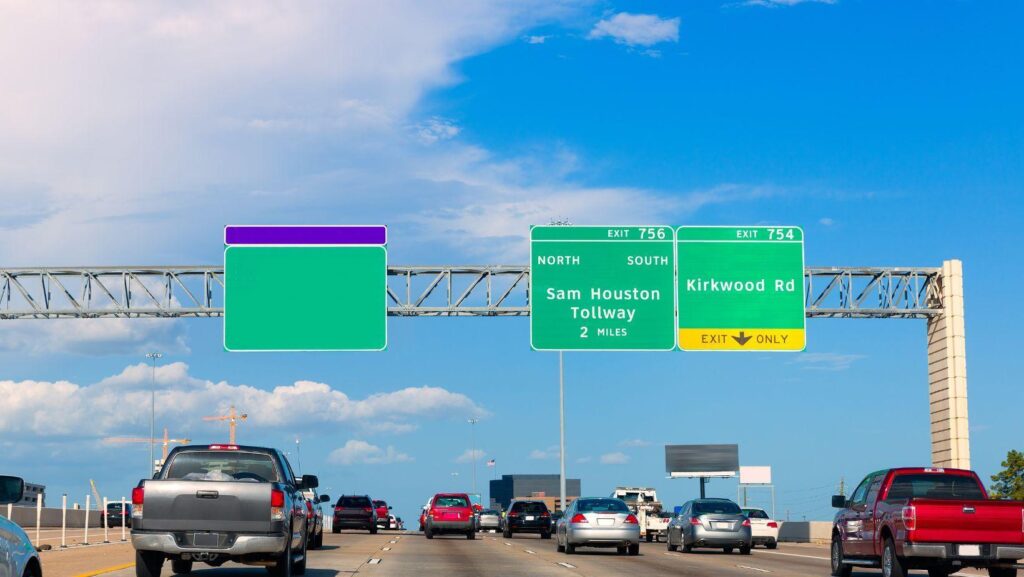
The stretch of Interstate 10 running west from Houston through the Energy Corridor and into Katy is one of the most heavily traveled highway segments in the United States. At peak hours, the I-10 Katy Freeway carries more vehicles per day than almost any other road in the country. The growth of suburban communities in Katy, Cinco Ranch, and the surrounding areas of Fort Bend and Harris counties has added hundreds of thousands of residents who depend on this corridor for their daily commute. When accidents happen on this stretch, the consequences can be severe, and the legal landscape that governs the claims that follow has specific features that every West Houston and Katy-area driver should understand.
The Crash Risks on the West Houston and Katy Corridor
Several features of the I-10 corridor and the surrounding road network create elevated crash risk that translates into serious injury cases every week.
I-10 traffic volume and speed differential. The Katy Freeway was widened significantly in the mid-2000s in one of the most expensive highway projects in Texas history, and the resulting roadway now includes managed lanes, frontage roads, and multiple merge points that create complex driver decision environments. The speed differential between managed lane traffic and frontage road traffic, and between the main lanes and the merge zones near major exits, is a recurring factor in high-speed sideswipe and rear-end collisions.
Commercial vehicle concentration. The Energy Corridor along I-10 west of Houston is one of the densest concentrations of oil and gas company offices and facilities in the world, and the surrounding industrial areas generate significant commercial truck and heavy equipment traffic. The Port of Houston’s cargo movement contributes additional commercial vehicle volume. When commercial vehicles are involved in crashes with passenger cars at freeway speeds, the size and weight disparity typically produces catastrophic injuries in the smaller vehicle.
Grand Parkway and cross-corridor traffic. The Grand Parkway (State Highway 99) intersects with I-10 in the Katy area and serves as a major north-south corridor connecting suburban communities across Fort Bend and Harris counties. The intersections between the Grand Parkway and surface streets in the Katy area, as well as the merge zones where Grand Parkway traffic enters I-10, are locations where speed mismatches and driver unfamiliarity with traffic patterns create crash risk.
According to the Texas Department of Transportation, Harris County and Fort Bend County together record tens of thousands of crashes annually, with the I-10 corridor accounting for a disproportionate share of the most serious incidents.
Texas Fault Rules and the Two-Year Deadline
Texas uses modified comparative fault, which means an injured person can recover damages as long as their share of responsibility for the accident is 50 percent or less. A plaintiff found to be 51 percent or more at fault recovers nothing. Where fault falls below the threshold, recovery is reduced in proportion to the plaintiff’s percentage.
Insurance carriers working I-10 corridor cases know this framework well and routinely investigate crashes with an eye toward building shared-fault arguments. Merge and lane-change crashes, in particular, often generate disputes about which driver had the right of way and which created the dangerous condition. Strong evidence from the scene, electronic data from vehicles, and witnesses who are contacted quickly all become important for establishing what actually happened.
Texas also imposes a two-year statute of limitations on personal injury claims. The clock starts on the date of the crash and does not extend for medical treatment, insurance negotiations, or family circumstances. Katy-area residents who delay contacting an attorney while waiting to see how injuries develop sometimes find the window has closed before they act.
The Houston car accident lawyers at Omega Law handle motor vehicle accident cases across Harris and Fort Bend counties, including the I-10 and Grand Parkway corridors that define the West Houston and Katy driving environment. A firm representative noted: “The Katy Freeway generates some of the most complex crash scenarios we see, because you have managed lanes, frontage roads, and multiple merge points all intersecting. Figuring out what actually happened requires real investigation, not just a police report.”
What Katy and West Houston Residents Should Do After a Serious Crash
The steps taken at the crash scene and in the days immediately following shape the entire case that follows.
Call 911 and wait for the Texas Department of Public Safety or Houston Police Department to respond. The crash report is a critical document and should be obtained as soon as it is available.
Photograph everything before vehicles are moved if it is safe to do so. On a high-speed corridor like I-10, scene conditions change quickly once emergency vehicles arrive, and the photographic record of the initial scene is often the only visual evidence that survives.
Gather witness contact information before anyone leaves. On the Katy Freeway, other drivers who observed the crash may be commuters who pass that stretch every day and could be valuable witnesses, but only if they are identified at the scene.
Seek medical evaluation the same day. The stress response after a serious crash can mask injuries that develop fully over the following hours or days. Traumatic brain injury, internal injuries, and significant soft tissue damage all benefit from early diagnosis.
A Reuters report on high-volume freeway crash litigation in major Texas cities found that early evidence preservation and prompt legal engagement consistently produce better outcomes for injured drivers, and that the gap between those who act quickly and those who wait often determines the difference in what is recovered.
The I-10 corridor between Houston and Katy represents both the economic vitality of the region and one of its most serious safety challenges. When crashes happen on those roads, Katy-area families deserve representation that matches the complexity of what they are facing.